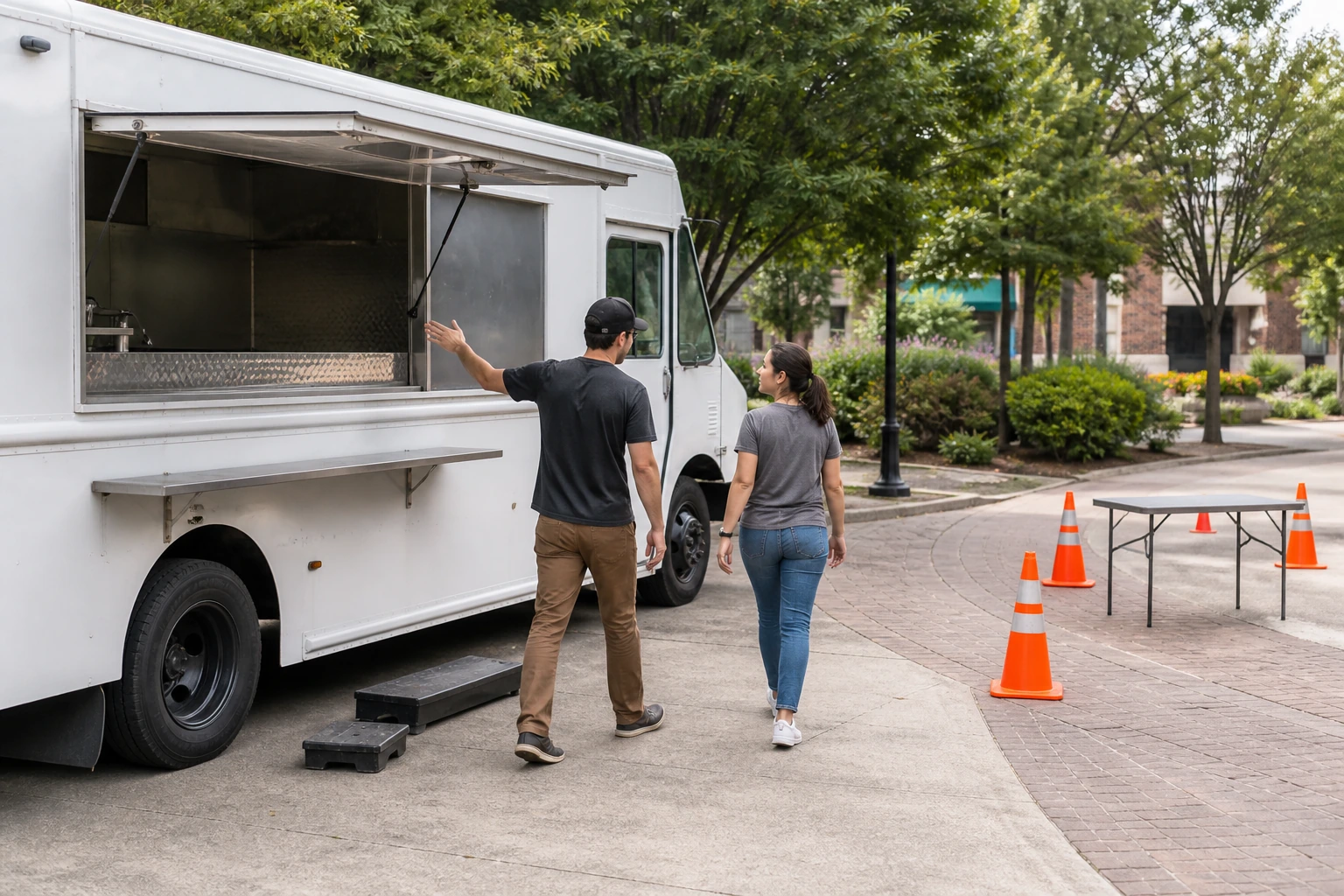
The walk should happen after the parking position is known but before tables, cones or portable waste bins settle into place. One person plays the guest; another stays beside the truck and watches the space. That small rehearsal catches practical conflicts that a diagram cannot show: an open hatch over a narrow line, a pickup point hidden behind people ordering, or a waste station placed in the route back to the event.
Local rules still come first. The City of Raleigh's official food-truck siting manual sets out permit, placement and operating requirements, including unobstructed pedestrian space and proper waste handling. A private event may use a different permit path, but the physical lesson is the same: the public route is part of the setup, not leftover space.
Begin with the truck's working edge
Walk the full side of the vehicle with the hatch, awning, steps and service counter in their operating positions. Look for low branches, curb changes, utility covers, fire access and anything that could force staff or guests into a vehicle lane. The truck also needs enough room to arrive, level, open and leave without moving a guest area halfway through the event.
Next, stand at the window as if you were ordering. Can you see the menu area without stepping backward into through-traffic? Can the person at the counter hear an order while another guest passes? Does the line form away from hot equipment and the truck's work side? These are not decorative questions. They decide whether the first ten customers create an orderly pattern or invent a new one under pressure.
Follow one guest from arrival to handoff
Start at the likely arrival point, move to the ordering line, then step out of that line and wait for pickup. The path should remain understandable without a staff member directing every turn. A stroller, mobility device or person carrying two meals needs more than a narrow opening at one moment; the useful space must stay open while the queue grows.
The U.S. Department of Justice's ADA standards describe an accessible route as a continuous, unobstructed way of pedestrian passage. An event organizer should confirm the exact legal requirements for the property and event, but the walk-through can expose obvious barriers immediately: cones pinching the route, a table projecting into the path, a cable crossing it, or a pickup crowd occupying the only level surface.
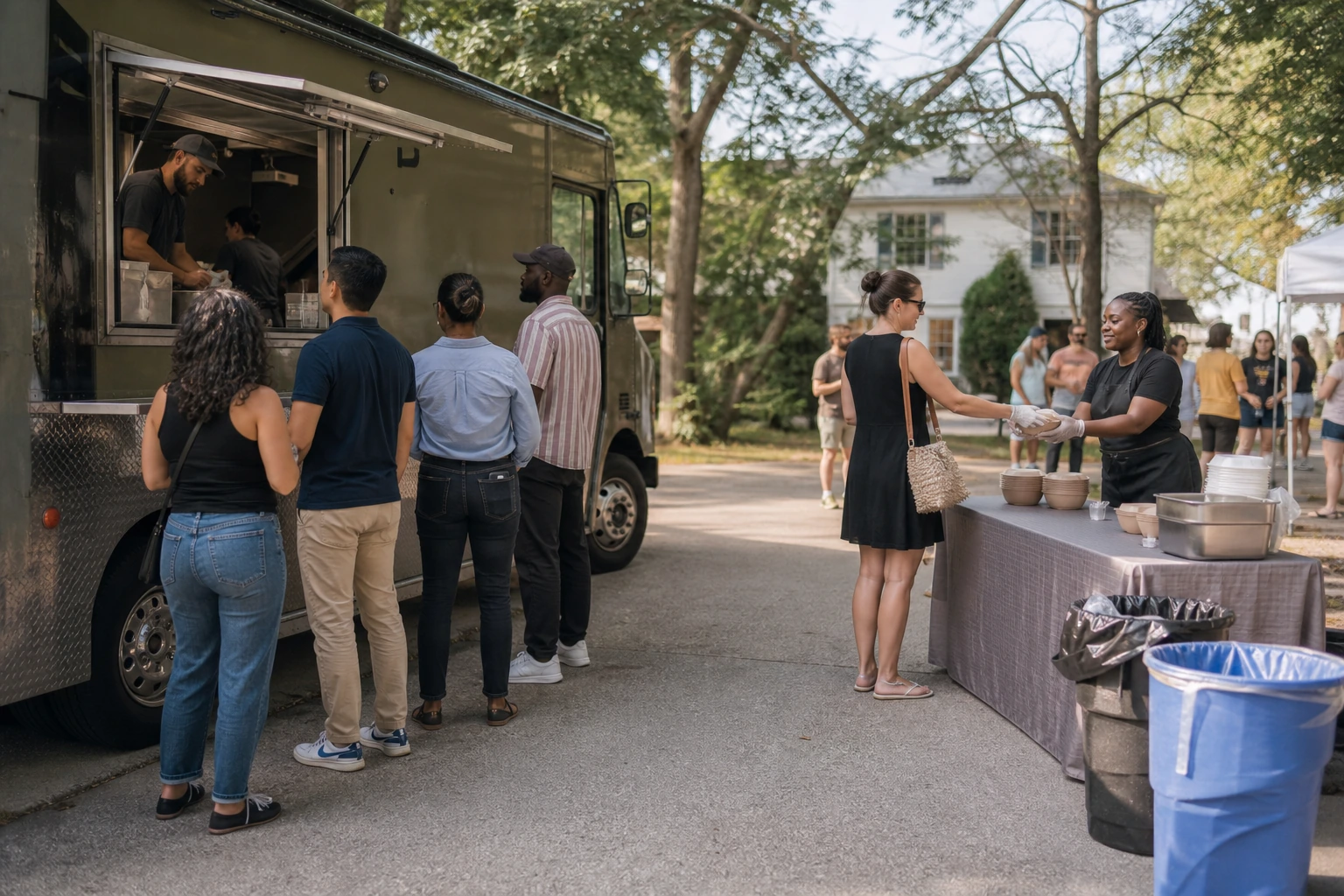
Ordering and pickup do not need to be far apart. They do need distinct waiting places. A guest who has ordered should be able to step aside without crossing the front of the line, and the person receiving food should be able to leave without walking back through it. Put napkins, condiments and waste downstream from pickup so small stops do not block the handoff.
Run the closing minutes before opening
Finish the rehearsal by imagining the least glamorous ten minutes: a full waste bin, a delivery arriving, a spill that needs cleaning and a staff member carrying supplies. North Carolina's food-protection rules page is the official starting point for state sanitation requirements, while county health officials and the event organizer can confirm the requirements that apply to the exact operation. The layout should support those responsibilities instead of placing service supplies or waste in a guest path.
Now repeat the guest walk once more. If the route still works with the service hatch open, the pickup point occupied and the waste station in use, the layout is ready for a real line. If it fails, move the light objects first—cones, tables and bins—then reconsider the truck position before guests arrive. Five minutes of honest walking is cheaper than managing a conflict through an entire service.
A good food-truck event layout does not ask guests to decode it. The truck has a clear working edge, the ordering line has a natural direction, pickup releases people into open space and the pedestrian route remains continuous. That is the practical foundation for a calmer catering or community event before the first order reaches the window.