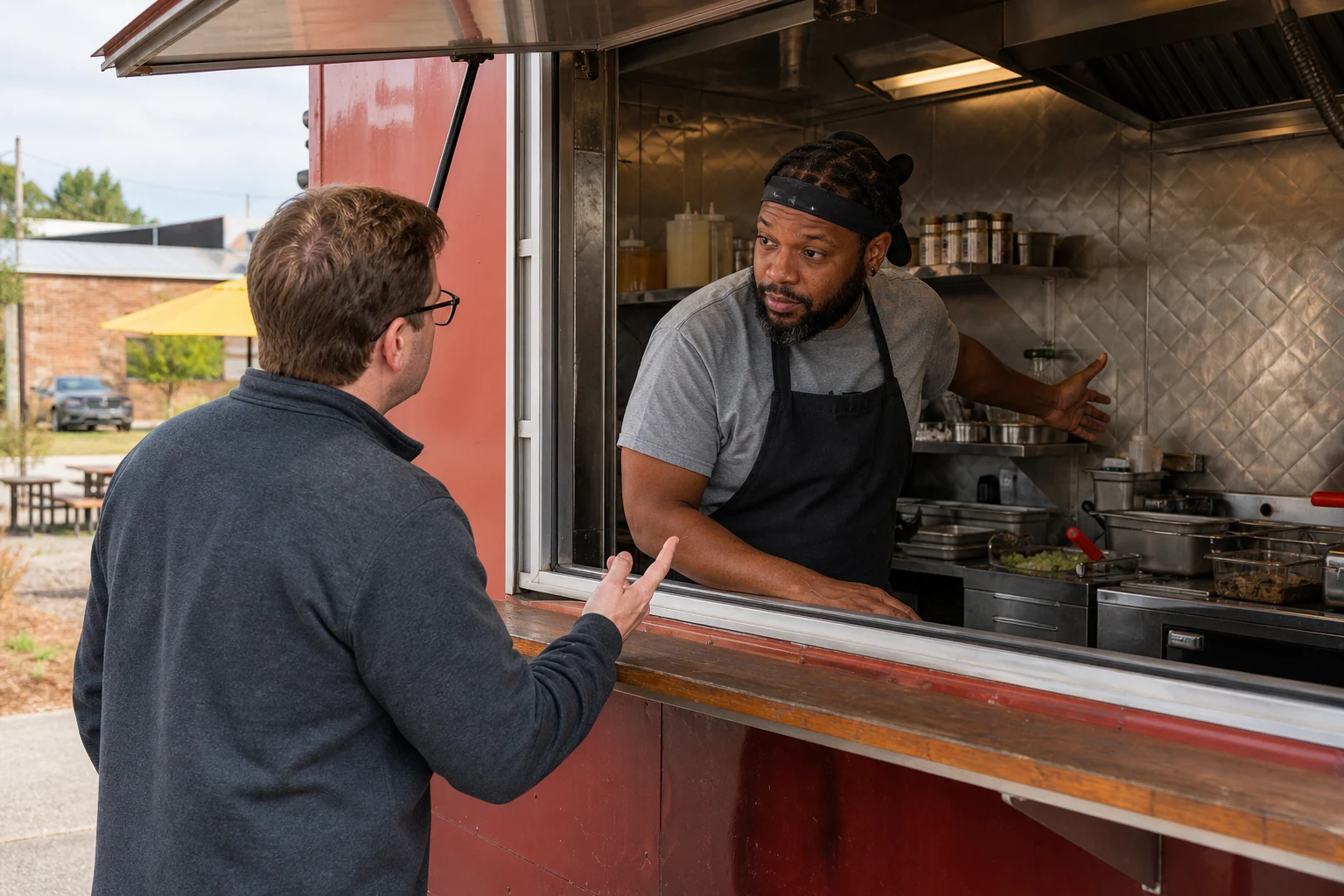
This is not a hunt for a magic phrase or a promise that any kitchen can make a meal safe. It is a way to exchange specific information before money changes hands. The customer explains what must be avoided; the food-truck team explains what they know, what equipment is shared and what they cannot guarantee.
The CDC's restaurant food-allergy summary says useful restaurant practices include trained staff, ingredient or recipe information, a plan for allergy requests and separate equipment or areas where feasible. That makes a good conversation concrete: it should cover the food, the process and who is responsible for the order.
Start plainly
“I have a food allergy to [name the exact food]. Could you check the ingredients and tell me whether it touches shared tools, oil or cooking surfaces?”
1. “What exactly is in this dish?”
Name the food rather than saying only “I have allergies.” In the United States, the FDA lists nine major food allergens: milk, egg, fish, crustacean shellfish, tree nuts, wheat, peanuts, soybeans and sesame. A person may be allergic to foods outside that list, so the exact ingredient still matters more than a general category.
Ask about the whole build: bread, sauce, spice mix, garnish, cooking fat and any pre-made component. A simple menu name may not reveal every ingredient. If the person taking the order does not know, a useful response is to pause and check with the cook or the person in charge—not to guess.
2. “Is any part pre-made or packaged?”
A food truck may cook most of a dish from scratch while buying a bread, dressing, dessert or seasoning blend from another supplier. Ask whether the label or recipe is available. “We make it here” and “it arrives sealed” are both useful answers; what matters is whether someone can identify the ingredients with confidence.
The FDA explains that federal allergen-labeling rules cover packaged foods, while food placed into a wrapper or box after a customer orders at the point of purchase is treated differently. That is one reason a direct question at the window can reveal information a short menu board does not show.
3. “What equipment does it share?”
Removing an ingredient from the final plate does not answer what happened earlier. Ask about the flat-top, fryer oil, tongs, cutting board, blender, prep containers and serving utensils. A cook who can describe the actual route through the kitchen is giving more useful information than someone who says only, “It should be fine.”
Cross-contact means an allergen is transferred unintentionally from one food or surface to another. In a retail-food study, the FDA examined how wiping and cleaning methods affect allergen removal and transfer. The practical point at a compact truck is simple: a shared surface or utensil matters, and merely leaving an ingredient off the plate may not remove that risk.
A clear answer
Names the ingredient source, the shared equipment and the steps the team can actually take.
An unclear answer
Relies on “probably,” dismisses a trace amount or cannot identify who prepared a component.
4. “Who will mark and hand over the order?”
At a busy window, a careful request can be lost between the order taker, cook and person calling names. Ask how the ticket will be marked and who will confirm the meal at handoff. Repeat the exact allergen when the food arrives. This is not being difficult; it closes a communication loop that may involve several people in a small space.
Keep the request short enough to repeat accurately. If you use a written allergy card as part of your own plan, hand it over before ordering and ask that the cook sees it. The card supports a conversation; it does not replace questions about the current menu, current staff and shared equipment.
5. “If you are not sure, what is the safest answer?”
An honest “we cannot accommodate that today” is more useful than a confident guess. Trucks work with changing stock, tight prep areas and rush periods. A team may be able to handle one request on a quiet day and be unable to do so when equipment or ingredients change.
If the answers remain vague, the practical choice may be not to order. Follow the emergency plan and medication guidance provided by your own clinician, and do not treat a menu conversation as medical advice or a guarantee. The goal is to make a decision using real kitchen information, including its limits.
A good food-allergy conversation at a food-truck window is brief but not casual: name the allergen, trace the ingredients, ask about shared equipment, confirm the handoff and accept uncertainty when it is real. Clear questions give both the customer and the kitchen a fair chance to make the safest available decision.