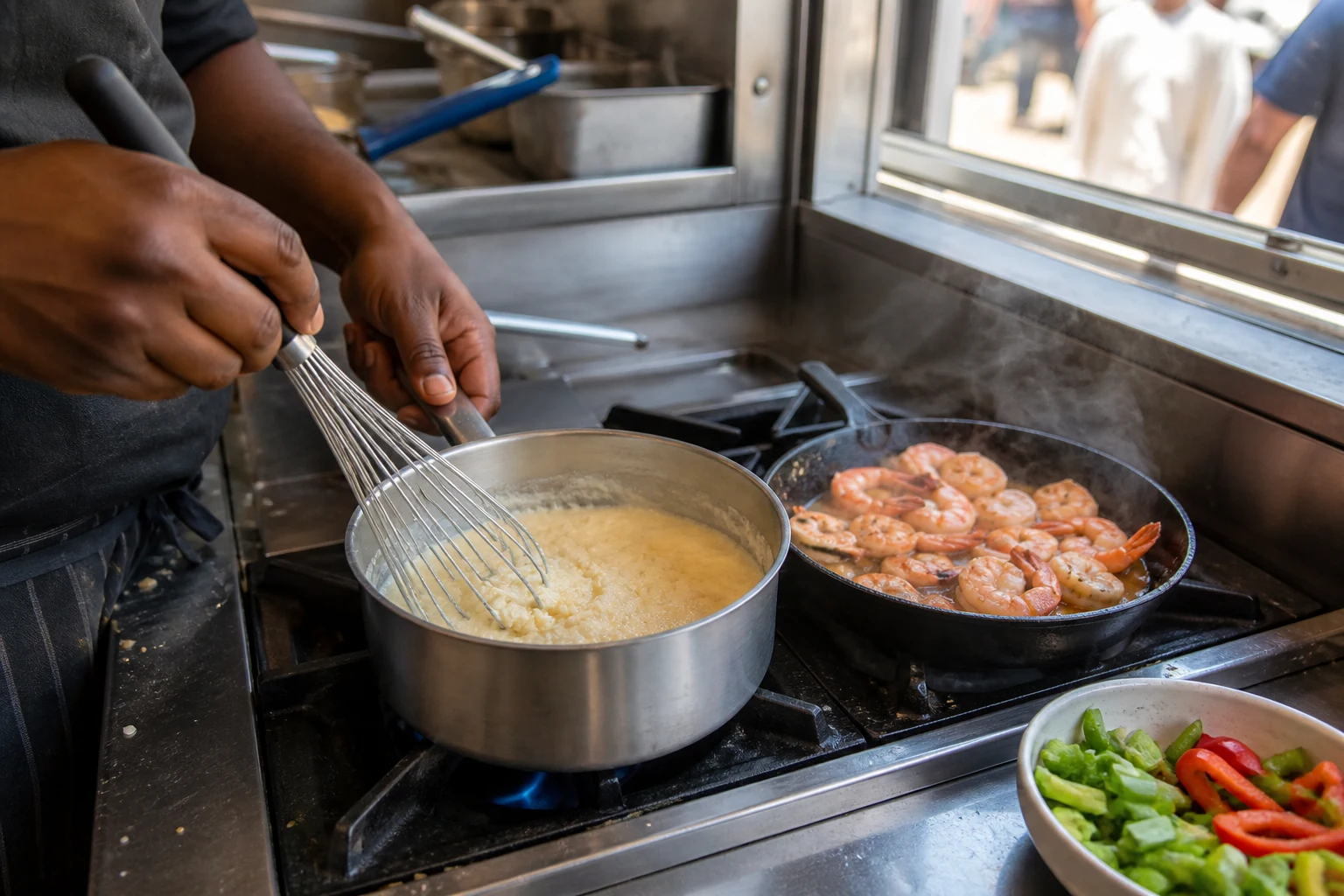
Start by reading the bowl as a set of jobs. The grits carry warmth and body. The savoury layer brings depth. The shrimp give sweetness and spring. Scallions, peppers or a little citrus stop the final spoonful from feeling flat. Each part can be simple when its role is clear.
Seafood handling is part of that timing, not a separate footnote. The FDA's seafood safety guidance recommends keeping seafood cold, avoiding cross-contamination and cooking most seafood to 145°F; shrimp should turn pearly and opaque. That is a useful boundary because shrimp left in the pan long after that point lose the tender contrast the bowl needs.
Creamy does not mean loose or overloaded
Good grits should settle into the bowl without running like soup or standing in a stiff mound. A steady simmer and regular whisking give the grain time to hydrate. Add liquid gradually near the end if the pot tightens; flooding it all at once makes the texture harder to control.
Fat can round the texture, but it cannot replace cooking time. Butter, cheese or cream should support the grain rather than turn the base into a sauce that coats every other flavour. The useful test is the spoon: the grits should hold a shallow trail for a moment, then ease back together.
Build depth, then give it an exit
The savoury side of the dish can come from bacon, garlic, stock, pan juices or a modest gravy. Layering two or three of those gives more control than simply adding more salt. Taste the base before the shrimp go in. If it is already aggressively salty or smoky, the finished bowl will have nowhere to go.
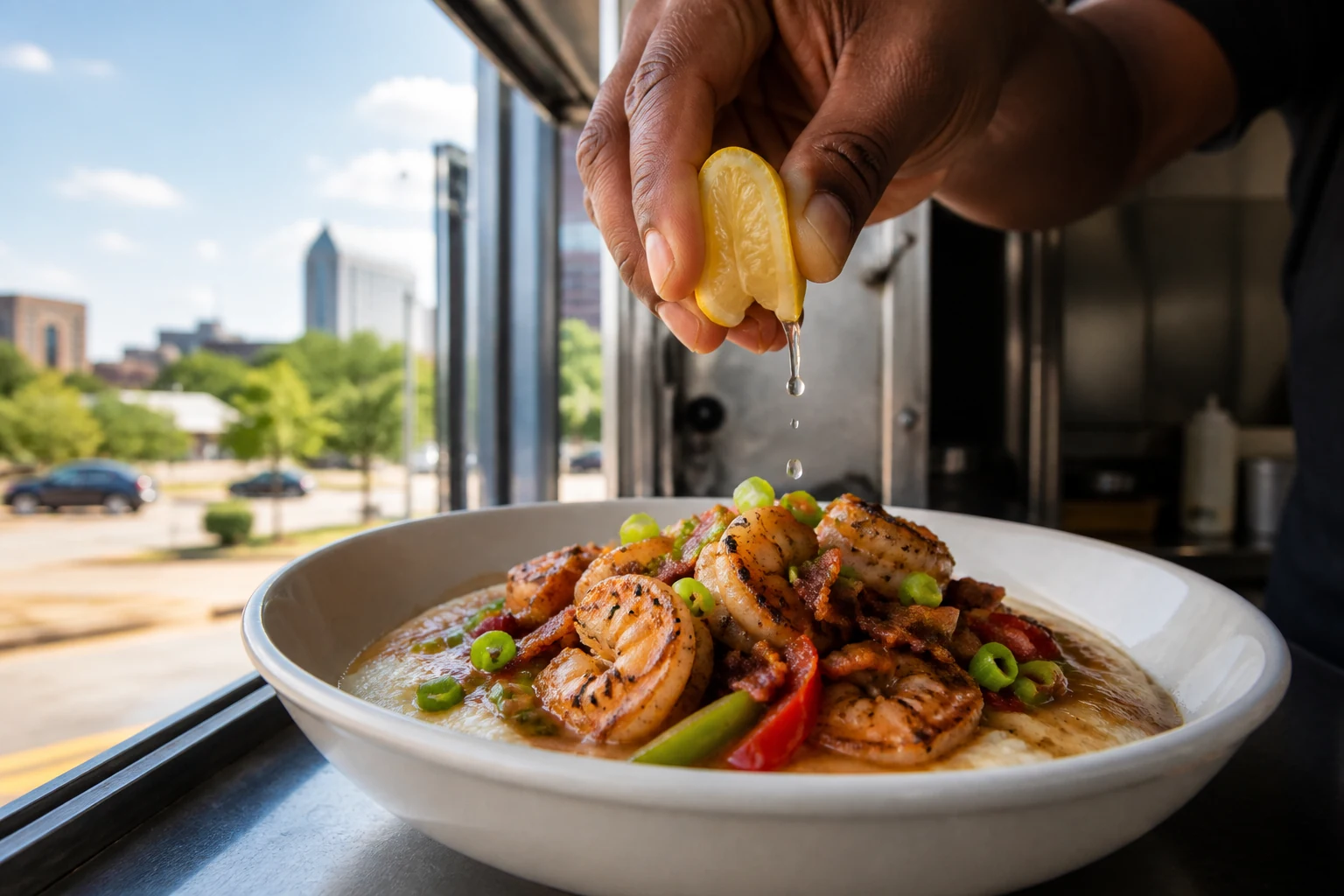
Brightness is the exit. Sliced scallions give freshness without extra liquid. Red and green bell pepper add sweetness, colour and a clean snap. A small squeeze of lemon at service can sharpen the whole bowl, but it should be a finish rather than the dominant taste. Add it, stir once, and taste again.
Keep the grits and shrimp on separate clocks
Grits are patient food. Shrimp are not. Let the grits reach their final texture first, then keep them warm over very low heat while the shrimp cook. A wide hot pan helps the shrimp sear instead of steaming, and a single uncrowded layer makes their progress easier to see.
The federal FoodSafety.gov temperature chart lists 145°F for fish and says shrimp should be cooked until the flesh is pearly or white and opaque. Use a clean food thermometer where practical, especially with larger shrimp or a crowded pan. Once they reach that point, move them off the heat; they will not improve while waiting for the base.
Bring the bowl together at the last moment. Spoon in the grits, add enough savoury sauce to season rather than drown them, then place the shrimp where they stay visible and distinct. Finish with the fresh elements. That sequence protects both texture and temperature.
Serve the contrast, not just the ingredients
A good bowl changes slightly from spoonful to spoonful. One bite may be mostly creamy grits, the next picks up shrimp and pepper, and the next catches bacon, scallion and a brighter edge. That variation is what keeps a rich dish lively.
If the bowl must wait briefly, hold the grits and topping separately. Loosen the grits with a small amount of hot liquid, warm them gently, and cook or reheat the shrimp only as much as food safety requires. Once assembled, serve promptly. The point is not complexity; it is giving each element the timing it needs.
Creamy, savoury and bright are not three competing styles. They are the balance points of the same dish. When the base is patient, the shrimp are quick and the fresh finish arrives last, shrimp and grits tastes generous without becoming heavy.