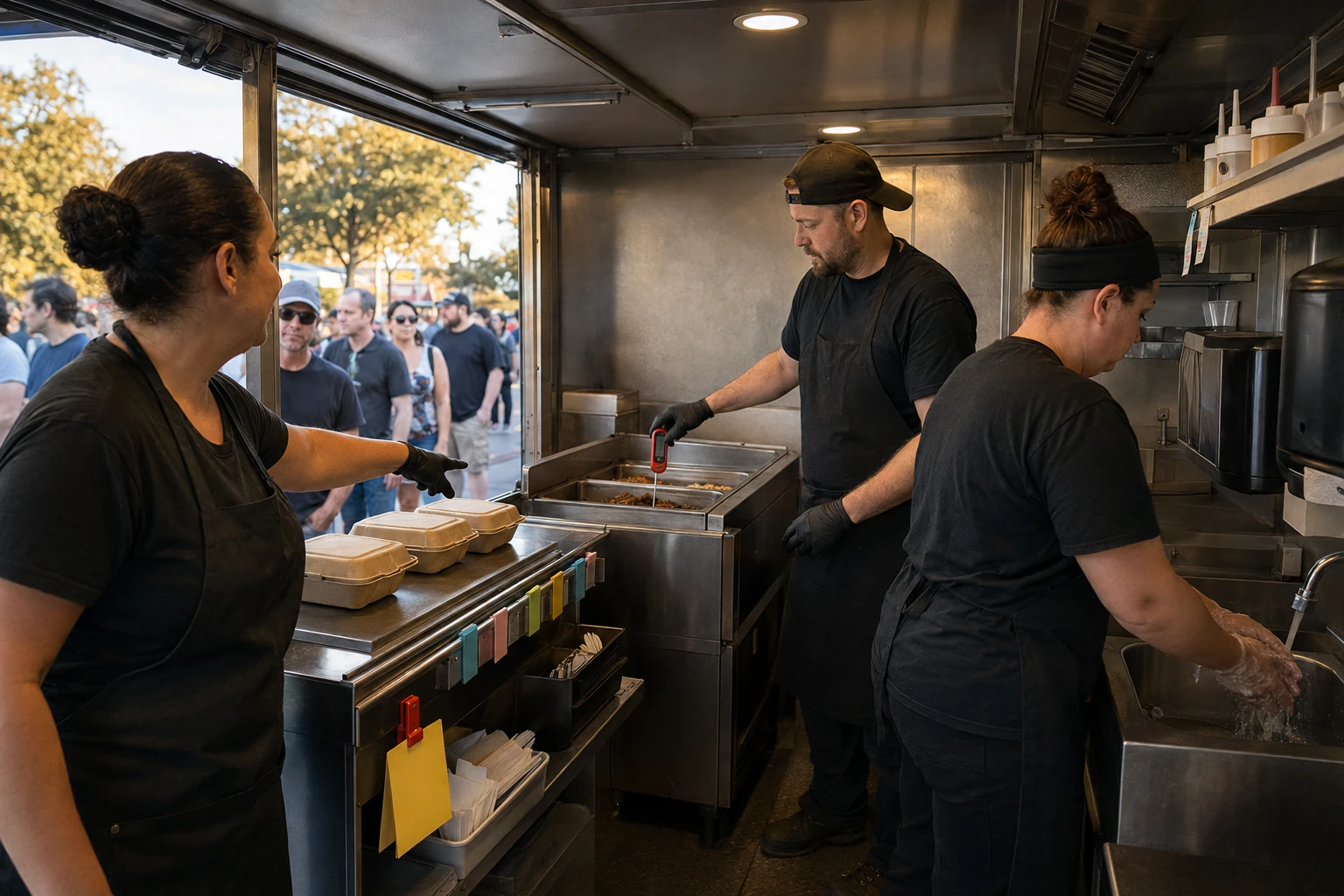
A food-truck shift can change while the grill is full, two customers are waiting and a third person has asked about an ingredient. If the outgoing worker simply says “you are all set,” the incoming worker has to rebuild the situation from tickets, containers and half-finished conversations. A short, structured handoff keeps the service window calm without pretending that every detail is equally urgent.
The FDA Food Code 2022 treats active managerial control and time-and-temperature practices as everyday parts of retail food safety. For a small mobile crew, that means the handoff should name the food or task that still needs a decision, not just the person who is leaving.
Name the orders that still need an owner
Start with unfinished work. Point to the ticket or covered container and say what is missing: payment, one side, a final temperature check or the customer’s return to the window. Use the order number or the food ordered rather than a description of the customer. That gives the next worker something concrete to match without broadcasting personal details across the queue.
A good handoff also distinguishes “cooking” from “ready but waiting.” The first still belongs to the cooking sequence; the second needs a pickup plan. If several bags look alike, keep the ticket physically paired with the order until the correct customer confirms it. Do not guess from position on the counter after the line has moved.
For a larger event, the same logic begins before the doors open. Our note on walking the food-truck event layout before service explains why the ordering point and pickup point need a clear relationship. During a shift change, mention any temporary queue change so the new window worker does not direct people into a blocked route.
Pass allergen questions as facts, not memory
An allergen question is not complete merely because the first worker heard it. State the exact dish, the ingredient being asked about, what has already been checked and who is still responsible for the answer. If the label, recipe or manager has not confirmed the information, say that plainly. “Not yet verified” is safer and more useful than a confident-sounding guess.
Keep the original packaging or approved ingredient information available when practical, and avoid turning the handoff into a promise that cross-contact cannot occur. The FDA’s consumer guidance on food-allergen labels explains the importance of identifying major allergens from the actual label. The crew’s job is to pass verified information accurately and to be honest about what the truck can and cannot control.
If the customer has stepped aside to wait for an answer, include where the conversation paused. The incoming worker should not ask the customer to repeat sensitive medical details in front of the line. A simple “we are checking the sauce label for the order at the side rail” is enough to reconnect the question to the correct food.
Verify heat, hands and the pickup lane
End the handoff with three visible checks. First, confirm which hot-held item is being monitored and use the truck’s normal clean, sanitized probe procedure rather than judging by steam or touch. Second, reset hand hygiene when the incoming worker changes from money, phones or cleaning tasks to ready-to-eat food. Third, look outside the window and make sure the pickup route is still usable.
Local rules govern mobile food units, so crews should follow the permit and inspection requirements for the place where they operate. The North Carolina Department of Health and Human Services, for example, publishes retail-food position statements and mobile-unit guidance for operators and regulators. A shift note should point workers back to the truck’s approved procedures rather than inventing a new threshold during service.
The pickup lane deserves the same attention as the counter. The U.S. Access Board guide to accessible routes describes clear width, passing space and changes in level as practical access questions. Boxes, coolers, folding signs and a growing queue can turn a previously clear approach into an obstacle, so the incoming worker should know who will move equipment or redirect the line.
The useful handoff is brief because it is specific. It leaves each open order with an owner, each allergen question attached to verified information, and each safety check visible to both shifts. Customers should experience one continuous service, even when the people at the window change.